


Breeding in Palworld is one of those mechanics that looks simple on the surface but has a lot going on underneath. There is a hidden number system running behind every egg, a full list of special combos that break the normal rules, and passive skill inheritance that can completely change how strong your team ends up being. This Palword Breeding guide covers all of it so you are not going in blind.
What You Need to Start Breeding in Palworld
You need exactly three things to get an egg:
- Breeding Farm
- Cake
- One male and one female Pal
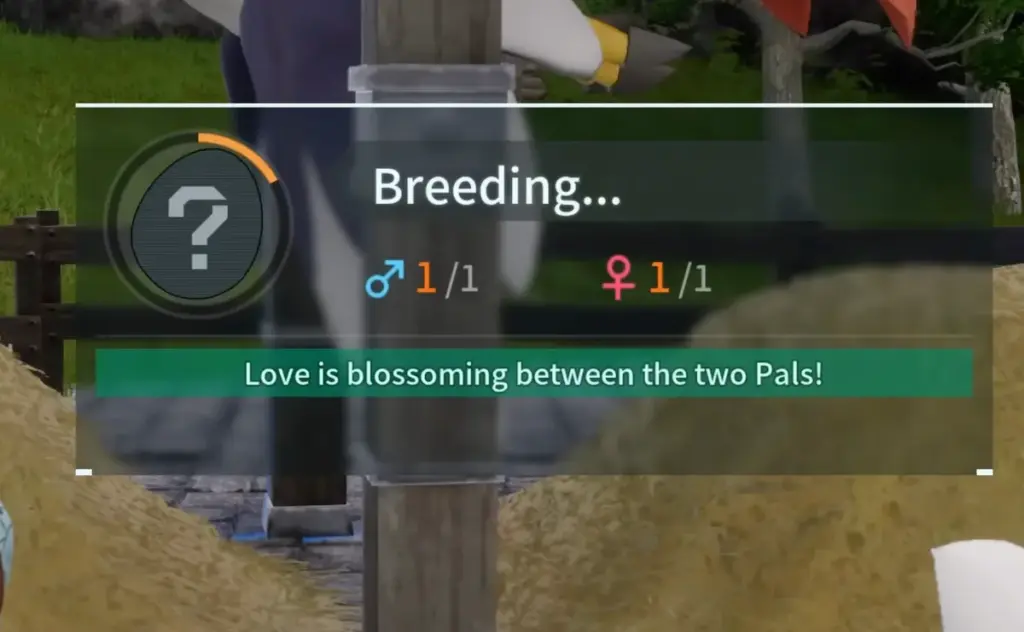
All three are required. If any one of them is missing, nothing will happen.
How to Build the Breeding Farm in Palworld
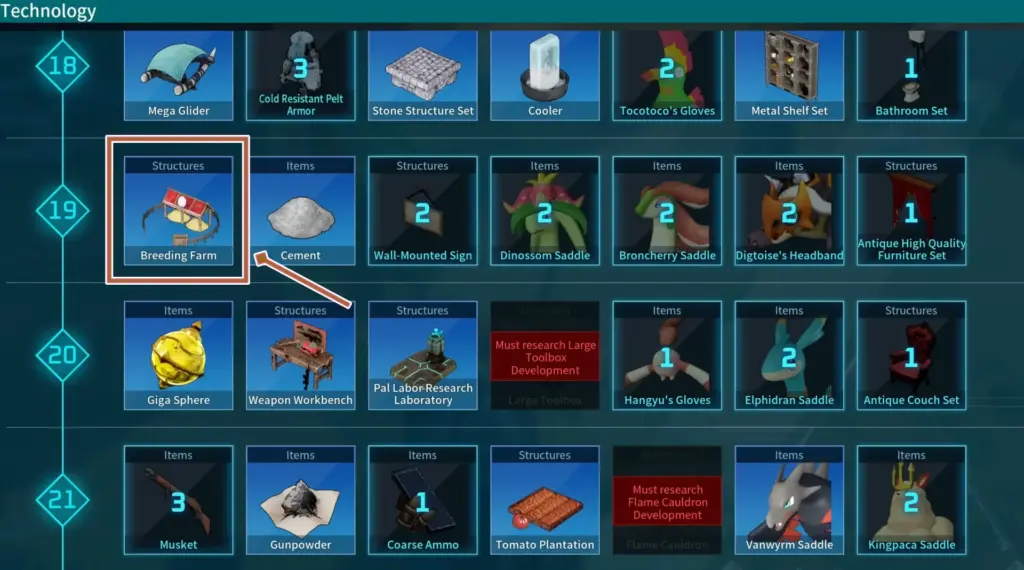
The Breeding Farm unlocks at level 19 in the Technology tree. Crafting it costs:
- 100x Wood
- 20x Stone
- 50x Fiber
is a fairly large structure, so clear out some space in your base before you try to place it.

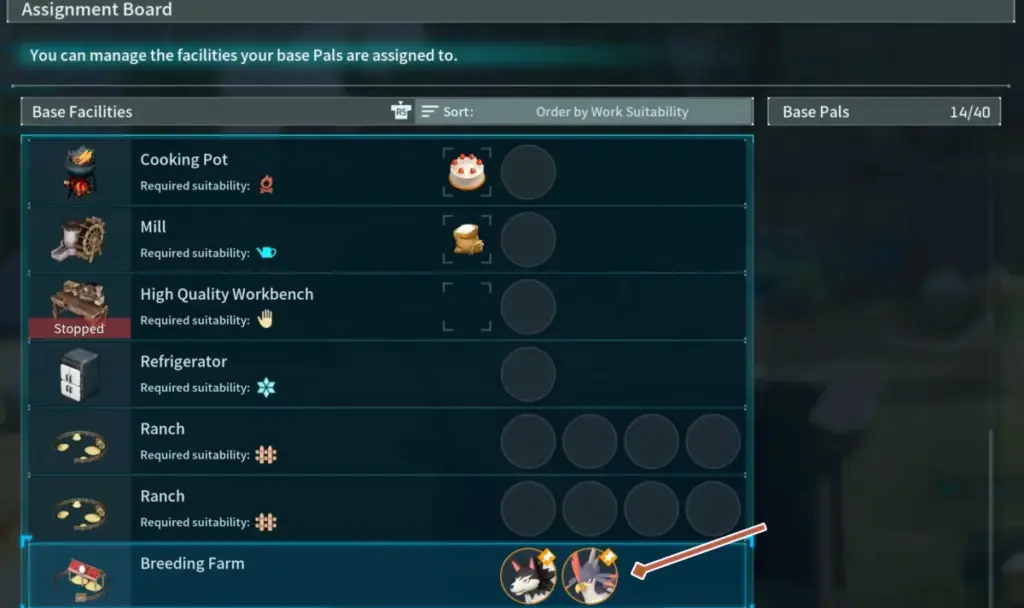
Once it is built, assign Pals by picking them up and throwing them at the structure. You can also use the Assignment Board to manage assignments. Your assigned Pals wander around inside the farm automatically and will stop working at night unless they have the Nocturnal passive.

How to Make Cake
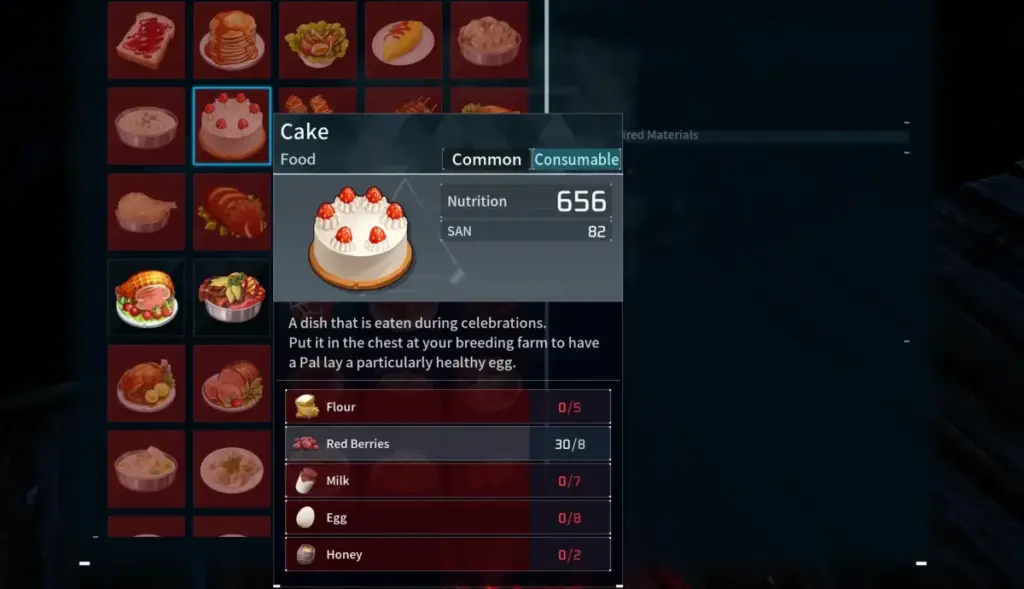
Each egg requires one Cake, so plan ahead if you are doing a lot of breeding. You craft Cake at a Cooking Pot using the ingredients below:

| Ingredient | Amount | How to Get It |
|---|---|---|
| Flour | 5 | Made from Wheat at a Mill (needs Watering Pals) |
| Red Berries | 8 | Bushes, base farm, or from Caprity at Ranch |
| Milk | 7 | From Mozzarina at Ranch |
| Egg | 8 | From Chikipi at Ranch |
| Honey | 2 | From Beegarde at Ranch |
Cake costs around 2,000 Work points to produce, so having Pals with Kindling or Cooking skills at your base helps a lot. Once you place Cake in the wooden chest on the right side of the Breeding Farm, the timer starts. One thing I appreciate is that Cake does not spoil inside that chest, so you can prep a big batch and store it safely.
How the Breeding Power System Works in Palworld
Every single Pal in the game has a hidden Breeding Power number ranging from 10 to 1500. Lower numbers mean the Pal is rarer or more powerful. You never see this number in-game, but it controls every breeding result.
The Breeding Formula
When two Pals breed, the game calculates the baby's power like this:
Baby Power = Floor((Parent 1 Power + Parent 2 Power + 1) / 2)
In plain language: add both parents' power numbers together, add 1, divide by 2, and round down. The game then finds the Pal whose Breeding Power is closest to that result, and that is what goes into the egg.
Here is an example: Breed Anubis (power 570) with Cattiva (power 1460)
Floor((570 + 1460 + 1) / 2) = 1015, which matches Robinquill.
If two Pals are equally close to the result, the one that comes first in the game's internal index wins. That is the tiebreaker.
The most important thing to understand about this system is that you can never breed a Pal stronger than your strongest parent. A baby's power will always land at or above the lowest parent's power, which means weaker. The trick is to breed that baby back with your strong parent repeatedly, getting closer each generation.
Here is what that chain looks like in practice, starting with Anubis (570):
| Generation | Parents | Baby Power | Result |
|---|---|---|---|
| 1 | Anubis (570) + Cattiva (1460) | 1015 | Robinquill |
| 2 | Anubis (570) + Robinquill (1015) | 793 | Arsox |
| 3 | Anubis (570) + Arsox (795) | 683 | Univolt |
| 4 | Anubis (570) + Univolt (680) | 625 | Bushi |
| 5 | Anubis (570) + Bushi (625) | 598 | Incineram |
| 6 | Anubis (570) + Incineram (590) | 580 | Anubis |
By generation 6, you are producing more Anubis. That is exactly how you use one powerful Pal to build a whole line of same-tier offspring without needing a second strong Pal to start.
If you don't want to do the math yourself, you can use our Palworld Breeding Calculator to find out exactly what Pal you'll get from any two parents instantly
Special Breeding Combinations in Palworld
Some Pals are completely locked out of the normal power formula. These Special Combinations only appear when you use an exact pair of parents, and the result always overrides whatever the formula would normally produce.
If you want any of the Pals listed below, this is the only way to get them through breeding:
| Parent 1 | Parent 2 | Result |
|---|---|---|
There is one special note for the Katress and Wixen pairing. The result actually depends on which one is female. A female Wixen gives you Wixen Noct, while a female Katress gives you Katress Ignis. Gender matters for that specific combo, so make sure you check before you breed.
Pals That Only Breed From the Same Species
A separate group of Pals cannot be produced through any cross-species breeding. The only way to breed them is to pair two parents of the exact same species. These tend to be the rarest and most powerful Pals in the game, which explains the extra restriction.
| # | Pal | Element |
|---|---|---|
| 003 | Chikipi | Neutral |
| 096B | Blazamut Ryu | Dragon / Fire |
| 108 | Paladius | Neutral |
| 109 | Necromus | Dark |
| 110 | Frostallion | Ice |
| 111 | Jetragon | Dragon |
| 112B | Bellanoir Libero | Dark |
| 113 | Selyne | Dark / Neutral |
| 124 | Mimog | Neutral |
| 125 | Xenovader | Dark |
| 126 | Xenogard | Dragon |
| 127 | Xenolord | Dark / Dragon |
Catching two of the same high-tier Pal in the wild to breed them is not easy, but it is the only path to getting their offspring legitimately.
Gender Rations in Palworld
Most Pals have been 50/50 male to female split, but quite a few break from that. This matters when you need specific gender for a breeding combo or when you are trying to manage your breeding lines. Some Pals like Lyleen and Elizabee are mostly female, so finding a male one in the wild can take some patience.
| Pal | Male % | Female % |
|---|---|---|
| Kingpaca / Kingpaca Cryst | 90% | 10% |
| Warsect / Warsect Terra | 85% | 15% |
| Mimog | 80% | 20% |
| Knocklem | 70% | 30% |
| Bastigor | 60% | 40% |
| Shroomer | 55% | 45% |
| Nitemary | 40% | 60% |
| Prunelia | 40% | 60% |
| Nyafia | 40% | 60% |
| Splatterina | 38% | 62% |
| Lovander | 30% | 70% |
| Lyleen / Lyleen Noct | 30% | 70% |
| Lullu | 30% | 70% |
| Mozzarina | 20% | 80% |
| Dazzi / Dazzi Noct | 20% | 80% |
| Selyne | 20% | 80% |
| Elizabee | 10% | 90% |
| Beegarde | 10% | 90% |
| Bellanoir / Bellanoir Libero | 5% | 95% |
Passive Skills and Breeding
One of the main reasons people get into breeding at all is passive skill inheritance. When two Pals produce an egg, the baby has a chance to inherit passive skills from either parent. If both your breeders have top-tier passives, you can end up with an offspring that combines the best of both.


The flip side is just as true. I always check passives before putting any Pal in the farm because if one parent has something like Coward or Pessimist, there is a real chance that gets passed down. A bad passive on a breeding pair can follow your line for several generations before you breed it out.
How to Speed Up Breeding in Palworld
Breeding has a time cost, but you can shorten it in a few ways. Having a Braloha at your base reduces the breeding timer, and a higher rank Braloha may improve the effect even further. If both Pals in the farm have the Philanthropist passive skill, that also cuts down the time.

The biggest boost comes from the Nocturnal passive. Normally, assigned Pals stop working at night. If both of your breeding Pals have Nocturnal, they keep going through the night and the overall egg time drops noticeably. Stacking all three of these together makes a real difference if you're doing a long breeding project.
Breeding in Palworld is more of a long game than it might first seem. Once you wrap your head around the power system and know which special combos exist, you can actually plan your breeding chains ahead of time and work toward exactly the Pal you want.
Check your parents' passives before every session, keep a Cake stockpile ready, and use Nocturnal Pals to keep the farm running through the night. The results are worth the setup.